How-to-Editor
Introduction
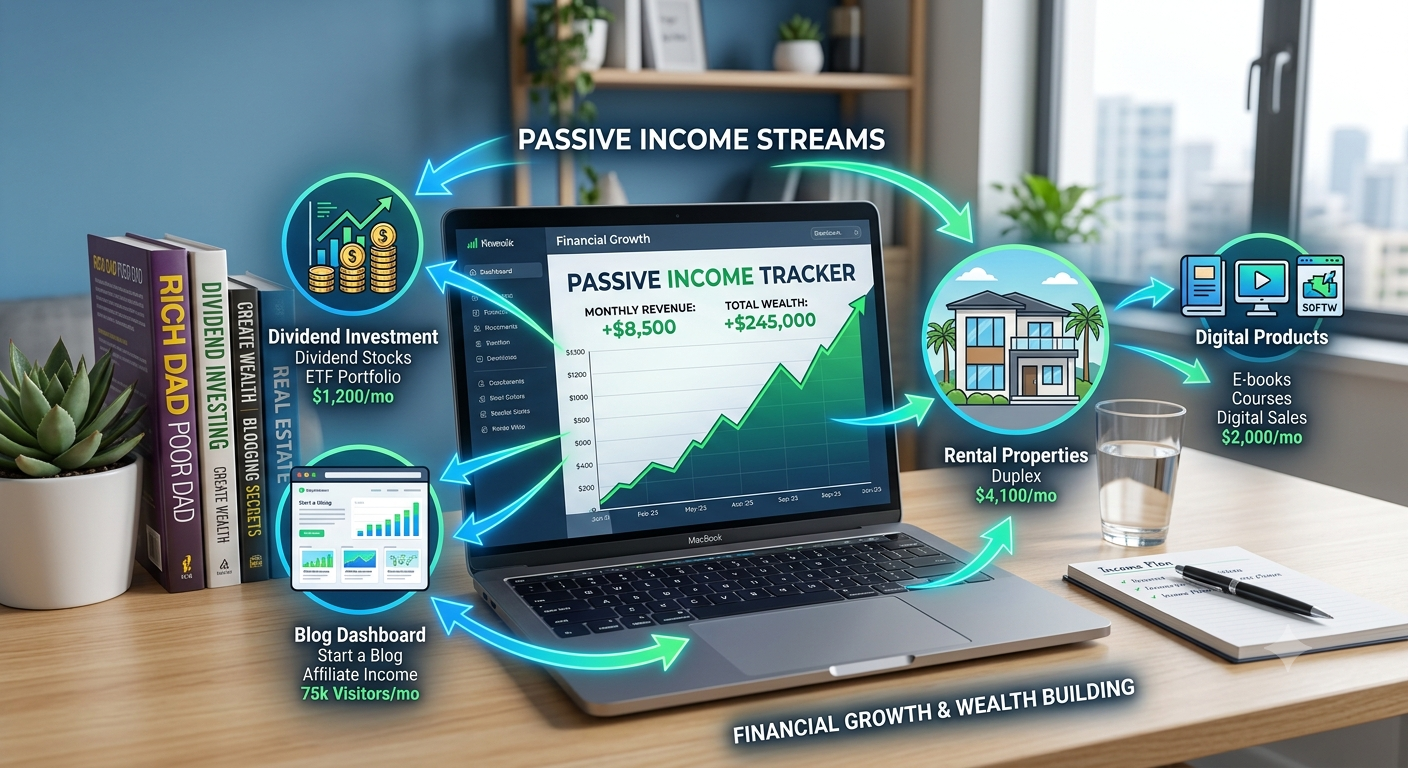
Learning how to Build Passive Income is one of the smartest financial decisions you can make. While passive income isn’t truly “money for nothing,” it allows you to earn income with less day-to-day effort after the initial work or investment is complete.
Whether your goal is to achieve financial freedom, save for retirement, pay off debt, or simply create additional income, building multiple passive income streams can help you reach those goals over time.
In this guide, you’ll learn what passive income really means, how it works, the best passive income ideas for beginners, common mistakes to avoid, practical tips, and realistic expectations before you get started.
What Is Passive Income?
Passive income is money earned from assets, investments, or businesses that require little ongoing effort after the initial setup. Unlike a traditional job where you’re paid for every hour worked, passive income continues generating revenue even when you’re not actively working every day.
However, it’s important to understand that passive income usually requires one or more of the following:
- Time
- Money
- Skills
- Consistent effort upfront
The goal is to create systems that continue producing income over the long term.
Why Building Passive Income Matters
Relying on one source of income can be risky. A job loss, economic slowdown, or unexpected emergency can affect your finances.
Passive income offers several advantages:
- Extra monthly cash flow
- Greater financial security
- More freedom and flexibility
- Reduced dependence on one employer
- Opportunity to build long-term wealth
- Earlier retirement possibilities
Even a small passive income stream can make a meaningful difference over time.
How Passive Income Works
Most passive income follows a simple process:
- Invest time or money.
- Build or purchase an income-producing asset.
- Maintain it occasionally.
- Earn recurring income.
For example:
- Write an ebook once and earn royalties for years.
- Invest in dividend-paying stocks and receive quarterly payments.
- Build a blog that generates advertising revenue.
- Create an online course that sells automatically.
The more quality assets you build, the stronger your passive income portfolio becomes.
Best Ways to Build Passive Income
1. Invest in Dividend Stocks
Dividend stocks are shares of companies that regularly distribute part of their profits to shareholders.
Advantages:
- Reliable income
- Potential stock price appreciation
- Long-term wealth creation
Keep in mind that stock prices fluctuate, and dividends are never guaranteed.
2. Invest in Index Funds and ETFs
Index funds and exchange-traded funds (ETFs) are popular among long-term investors because they provide diversification with relatively low costs.
Benefits include:
- Lower risk than buying individual stocks
- Professional management
- Long-term growth potential
- Passive investing approach
This option works well for beginners who want steady growth.
3. Start a Blog
Blogging remains one of the most popular digital passive income opportunities.
A successful blog can earn through:
- Display advertising
- Affiliate marketing
- Sponsored content
- Digital products
- Online courses
- Memberships
Although blogging takes time, quality content can generate traffic for years.
4. Create a YouTube Channel
YouTube videos can continue generating views long after publication.
Revenue sources include:
- Ad revenue
- Affiliate commissions
- Sponsorships
- Merchandise
- Digital products
Educational, tutorial, review, and evergreen videos often perform well over time.
5. Sell Digital Products
Digital products require no physical inventory and can be sold repeatedly.
Popular options include:
- Ebooks
- Templates
- Printables
- Stock photos
- Design assets
- Spreadsheets
- Planners
- Software
After creation, delivery is usually automated.
6. Build an Online Course
If you have expertise in a subject, creating an online course can become a valuable passive income asset.
Examples include:
- Photography
- Graphic design
- Programming
- Cooking
- Fitness
- Language learning
- Business skills
A well-designed course can continue selling for years with occasional updates.
7. Affiliate Marketing
Affiliate marketing involves recommending products or services and earning a commission for successful referrals.
You can promote products through:
- Blogs
- YouTube
- Email newsletters
- Social media
- Podcasts
Choose products you genuinely trust to build credibility with your audience.
8. License Creative Content
Creative professionals can earn recurring income by licensing their work.
Examples include:
- Music
- Stock photography
- Video footage
- Illustrations
- Fonts
- Graphics
Each download or license can generate additional revenue.
9. Rent Out Property
Real estate has long been considered a strong passive income strategy.
Options include:
- Residential rentals
- Commercial property
- Vacation rentals
- Parking spaces
- Storage units
While property management requires some involvement, hiring a management company can reduce your workload.
10. Peer-to-Peer Lending
Some platforms allow investors to lend money directly to borrowers.
Potential benefits:
- Regular interest payments
- Diversified investment opportunities
However, borrowers may default, making risk management important.
11. Build a Mobile App or Software Tool
Software products can scale remarkably well.
Examples:
- Budget trackers
- Productivity apps
- Business software
- Educational apps
After launch, updates and customer support become the primary ongoing responsibilities.
12. Sell Print-on-Demand Products
Print-on-demand businesses eliminate inventory management.
Products include:
- T-shirts
- Hoodies
- Mugs
- Posters
- Phone cases
- Tote bags
Orders are printed and shipped by third-party providers, making the business relatively hands-off.
Passive Income Ideas Compared
| Passive Income Method | Startup Cost | Time to Income | Ongoing Effort | Risk Level |
|---|---|---|---|---|
| Dividend Stocks | Medium | Medium | Low | Medium |
| Index Funds | Medium | Long | Low | Medium |
| Blogging | Low | Long | Medium | Low |
| YouTube | Low | Medium | Medium | Low |
| Affiliate Marketing | Low | Medium | Medium | Low |
| Digital Products | Low | Medium | Low | Low |
| Online Courses | Low | Medium | Low | Low |
| Rental Property | High | Medium | Medium | Medium |
| Print-on-Demand | Low | Medium | Low | Low |
| Mobile Apps | Medium | Long | Low | Medium |
How to Choose the Right Passive Income Stream
Choosing the right strategy depends on your resources and goals.
Ask yourself:
- How much money can I invest?
- How much time can I dedicate initially?
- What skills do I already have?
- Am I comfortable with investment risks?
- Do I enjoy creating content?
- Am I looking for short-term or long-term income?
For example:
Someone with limited money but strong writing skills may benefit from blogging.
Someone with investment capital may prefer dividend investing.
A graphic designer could earn through digital templates and print-on-demand products.
Can You Build Multiple Passive Income Streams?
Absolutely.
Many successful entrepreneurs combine several income sources.
For example:
- Blog advertising
- Affiliate marketing
- YouTube revenue
- Online courses
- Dividend investments
- Digital downloads
Multiple streams reduce financial risk because you’re not relying on one source.
How Long Does It Take?
The timeline varies considerably.
| Income Method | Typical Timeline |
|---|---|
| Dividend Investing | Immediate dividends after investment schedule |
| Blogging | 6–18 months |
| YouTube | 6–24 months |
| Online Courses | 3–12 months |
| Affiliate Marketing | 6–18 months |
| Rental Property | Immediately after tenants move in |
Most successful passive income businesses require patience and consistent effort before becoming profitable.
How Much Money Can You Make?
Income depends on many factors, including:
- Market demand
- Skill level
- Audience size
- Marketing
- Investment amount
- Competition
- Consistency
Some people earn an extra $100 per month, while others build six- or seven-figure businesses. Results vary significantly, so avoid anyone promising guaranteed earnings.
Risks You Should Know
Every passive income strategy has risks.
Examples include:
- Market downturns
- Low website traffic
- Changing search engine algorithms
- Product competition
- Economic recessions
- Real estate vacancies
- Platform policy changes
Diversification helps reduce these risks.
Step-by-Step Plan to Start Building Passive Income
Step 1: Set Clear Goals
Decide why you’re building passive income.
Examples:
- Replace your salary
- Pay off debt
- Save for retirement
- Build emergency savings
Step 2: Choose One Strategy
Avoid trying everything at once.
Focus on mastering one income stream first.
Step 3: Learn the Necessary Skills
Invest time in learning:
- SEO
- Content marketing
- Investing basics
- Copywriting
- Email marketing
- Financial literacy
Knowledge compounds just like money.
Step 4: Build Consistently
Consistency often matters more than intensity.
Small weekly progress adds up over months and years.
Step 5: Reinvest Profits
Instead of spending early earnings:
- Buy more investments
- Improve your website
- Create additional products
- Expand marketing
Reinvestment accelerates growth.
Step 6: Diversify
Once one income stream becomes stable, add another.
This creates stronger long-term financial resilience.
Pro Tips
- Start with one passive income source instead of several.
- Focus on solving real problems for your audience.
- Build evergreen content that stays relevant for years.
- Reinvest your early profits instead of spending them.
- Learn basic SEO if creating online content.
- Automate repetitive tasks whenever possible.
- Track your income and expenses carefully.
- Continue learning new digital skills.
- Diversify your income gradually.
- Be patient—compounding takes time.
- Build an email list alongside your website or channel.
- Regularly update your content or products to keep them valuable.
Common Mistakes to Avoid
- Believing passive income requires no work.
- Chasing get-rich-quick schemes.
- Expecting overnight success.
- Ignoring risk management.
- Investing money you can’t afford to lose.
- Giving up too early.
- Not researching your chosen niche.
- Depending on only one platform.
- Forgetting about taxes and legal obligations.
- Neglecting quality in favor of quantity.
- Copying competitors without adding unique value.
- Failing to track performance and improve over time.
Frequently Asked Questions
1. What is the easiest way to build passive income?
For beginners, investing in diversified index funds or creating digital content such as blogs and YouTube channels are among the most accessible options. The best choice depends on your budget, skills, and goals.
2. Is passive income really passive?
Not completely. Most passive income requires significant upfront work or investment and occasional maintenance afterward.
3. How much money do I need to start?
Many online passive income ideas can begin with less than $100, while investments like real estate typically require much more capital.
4. Can I build passive income while working full-time?
Yes. Many people start by working evenings or weekends until their passive income grows.
5. Which passive income method is safest?
Diversified index funds are generally considered lower risk than many individual investments, though all investments carry some level of risk.
6. How long before I earn meaningful income?
Digital businesses often take several months or even years to gain momentum. Investment income depends on the size of your portfolio.
7. Do I have to pay taxes on passive income?
In many countries, passive income is taxable. Tax rules vary by location, so consult a qualified tax professional for guidance.
8. Can passive income replace a full-time job?
It’s possible, but it usually requires years of consistent effort, disciplined investing, and multiple income streams.
9. Is blogging still profitable?
Yes. Blogs that publish high-quality, helpful content and attract consistent traffic can earn through advertising, affiliate marketing, and digital products.
10. Should I build multiple income streams at once?
It’s generally more effective to establish one successful income stream first before expanding into additional ones.
Conclusion
Learning how to Build Passive Income is less about finding shortcuts and more about creating valuable assets that continue generating income over time. Whether you choose investing, blogging, affiliate marketing, digital products, online courses, or real estate, success depends on patience, consistency, and continuous improvement.
Remember that every passive income strategy involves some level of risk and upfront effort. Research your options carefully, start with realistic expectations, diversify as your income grows, and seek advice from qualified financial or legal professionals when making important investment decisions.
The best time to start building passive income was years ago. The next best time is today. Begin with one achievable strategy, stay committed, and let your efforts compound into long-term financial freedom.