How-to-Editor
Introduction
Learning how to organize your home efficiently can transform your daily life. A tidy, well-organized home isn’t just visually appealing—it also saves time, reduces stress, and makes everyday tasks easier. Whether you live in a small apartment or a large house, the right organizing strategies help you maximize your space and keep clutter under control.
The key is to create systems that are simple to maintain rather than aiming for perfection. In this guide, you’ll discover practical room-by-room organizing methods, decluttering strategies, storage ideas, maintenance habits, and expert tips that make home organization achievable for beginners and experienced homeowners alike.
Why Home Organization Matters
An organized home offers benefits beyond appearance. It can improve productivity, make cleaning faster, and create a more relaxing environment.
Some of the biggest advantages include:
- Less time spent searching for lost items
- Easier daily routines
- Better use of available space
- Reduced household stress
- Improved cleanliness
- More enjoyable living environment
- Easier maintenance over time
Even organizing one room can create a noticeable improvement in your everyday life.
How to Organize Your Home Step by Step
Instead of trying to organize everything in one weekend, break the project into manageable steps.
Step 1: Set Realistic Goals
Start by deciding what you want to achieve.
Examples include:
- Create more storage
- Reduce clutter
- Make cleaning easier
- Improve room functionality
- Organize seasonal items
Having a clear goal keeps you focused throughout the process.
Step 2: Declutter Before Organizing
Many people buy storage containers before removing unnecessary items. This often creates more clutter instead of solving the problem.
Ask yourself:
- Have I used this in the last year?
- Do I truly need it?
- Does it still work?
- Would someone else benefit from it?
Sort belongings into four categories:
- Keep
- Donate
- Sell
- Recycle or dispose
Remember, organization begins with owning fewer unnecessary items.
Step 3: Organize One Room at a Time
Trying to organize your entire house in one day can quickly become overwhelming.
Instead, focus on one area, such as:
- Bedroom
- Kitchen
- Bathroom
- Living room
- Home office
- Garage
- Laundry room
Completing one room provides motivation to continue.
Organizing Your Living Room
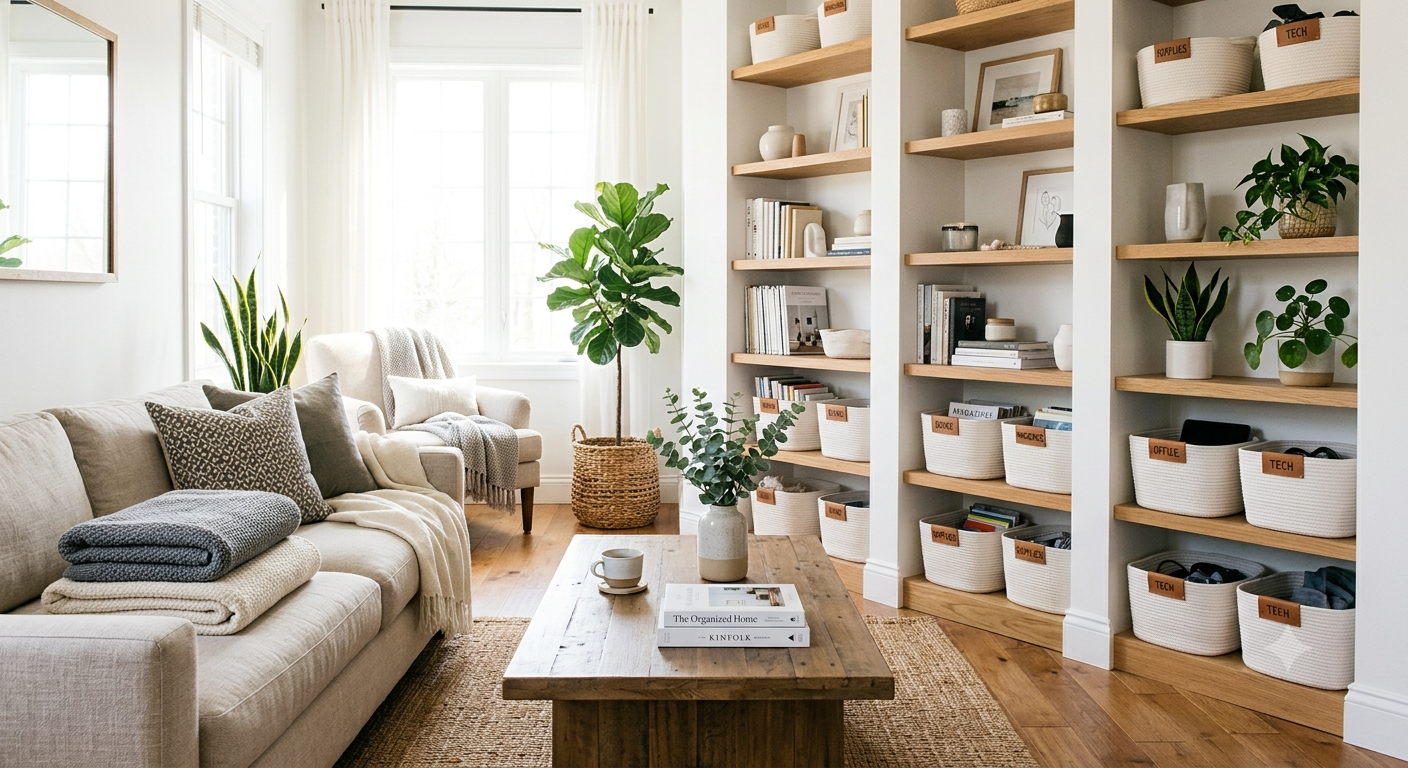
The living room often becomes a storage space for random items.
Start by removing everything that doesn’t belong there.
Store commonly used items in designated spaces.
Examples include:
- Remote controls
- Books
- Blankets
- Chargers
- Children’s toys
Storage ideas:
- Decorative baskets
- Storage ottomans
- Floating shelves
- TV cabinets
- Drawer organizers
Keep surfaces mostly clear to create a spacious appearance.
Organizing Your Kitchen
The kitchen is one of the busiest rooms in any home.
Group Similar Items
Store items by category.
Examples:
- Baking supplies
- Cooking utensils
- Snacks
- Spices
- Canned foods
- Cleaning products
This makes cooking much faster.
Use Vertical Storage
Maximize cabinet space with:
- Shelf risers
- Stackable containers
- Hanging racks
- Magnetic knife strips
- Wall-mounted hooks
Label Containers
Transparent containers with labels help everyone find items quickly.
Good options include:
- Rice
- Pasta
- Flour
- Sugar
- Coffee
- Tea
Labels also make grocery shopping easier.
Organizing the Bedroom
A peaceful bedroom starts with reducing visual clutter.
Closet Organization
Arrange clothes by:
- Season
- Color
- Type
For example:
- Shirts
- Pants
- Dresses
- Jackets
Use matching hangers for a cleaner appearance.
Maximize Storage
Use under-bed storage for:
- Seasonal clothing
- Shoes
- Blankets
- Travel bags
Drawer dividers help organize:
- Socks
- Underwear
- Accessories
Organizing the Bathroom
Bathrooms often have limited storage.
Keep only everyday essentials on countertops.
Store extra supplies in cabinets.
Useful storage ideas include:
- Drawer organizers
- Corner shelves
- Over-the-toilet cabinets
- Hanging baskets
- Wall-mounted shelves
Dispose of expired medicines and cosmetics regularly.
Organizing the Home Office
A clutter-free workspace improves concentration.
Keep only essential items on your desk.
Store documents using:
- Filing cabinets
- Document folders
- Labelled binders
Manage cables with:
- Cable clips
- Cable sleeves
- Cable boxes
Digital organization is equally important.
Create folders for:
- Bills
- Work documents
- Photos
- Personal records
Organizing the Garage
Garages often become dumping grounds.
Start by removing broken or unused items.
Install:
- Wall hooks
- Pegboards
- Heavy-duty shelves
- Ceiling storage racks
Store similar equipment together.
Examples:
- Gardening tools
- Sports equipment
- Holiday decorations
- Car supplies
Clearly label every storage container.
Smart Storage Solutions for Every Home
Good storage systems make organization easier to maintain.
Here are practical options:
| Storage Solution | Best For |
|---|---|
| Storage bins | Seasonal items |
| Drawer dividers | Small accessories |
| Vacuum storage bags | Bedding and winter clothes |
| Floating shelves | Books and decorations |
| Stackable containers | Pantry organization |
| Storage benches | Entryways |
| Over-the-door organizers | Shoes and toiletries |
| Rolling carts | Bathrooms and kitchens |
Choose storage products that match your available space instead of buying containers you may never use.
Daily Habits That Keep Your Home Organized
Organization is about consistent habits rather than occasional deep cleaning.
Helpful daily routines include:
- Make your bed every morning.
- Wash dishes after meals.
- Return items to their proper place.
- Spend 10 minutes tidying each evening.
- Sort mail immediately.
- Empty trash before it overflows.
- Wipe kitchen counters daily.
- Fold laundry promptly.
- Clean spills immediately.
- Keep entryways clutter-free.
Small habits prevent clutter from building up.
Weekly Home Organization Checklist
A simple weekly routine keeps your home manageable.
- Vacuum all rooms.
- Dust shelves and furniture.
- Clean bathroom surfaces.
- Organize the refrigerator.
- Sort paperwork.
- Declutter one drawer.
- Wash bedding.
- Empty donation box if full.
- Water indoor plants.
- Review grocery inventory.
Organizing a Small Home
Limited space requires creative storage solutions.
Focus on furniture that serves multiple purposes.
Examples include:
- Storage beds
- Foldable tables
- Wall-mounted desks
- Nesting tables
- Storage benches
Use vertical space whenever possible.
Install shelves higher on walls to increase storage without using floor space.
Organizing With Kids
Children can learn organization through simple routines.
Use labeled bins with pictures for younger children.
Assign homes for:
- Toys
- Books
- Art supplies
- School materials
Turn cleanup into a short daily activity rather than waiting until rooms become messy.
Reward consistency instead of perfection.
Organizing Seasonal Items
Store items you use only part of the year separately.
Examples include:
- Holiday decorations
- Winter clothing
- Camping gear
- Summer accessories
Vacuum-sealed bags reduce storage space for bulky clothing and blankets.
Label every storage container clearly.
Digital Home Organization
Home organization also includes digital spaces.
Regularly:
- Delete duplicate photos.
- Back up important files.
- Organize documents into folders.
- Remove unused apps.
- Rename important files consistently.
Digital clutter can waste just as much time as physical clutter.
How to Maintain an Organized Home
Maintaining organization is much easier than starting over.
Follow the “One In, One Out” rule.
Whenever you buy something new, donate or recycle a similar item.
Review storage areas every few months to prevent clutter from returning.
Consistency always beats perfection.
Pro Tips for Organizing Your Home
- Declutter before buying storage containers.
- Label everything clearly.
- Store frequently used items within easy reach.
- Use transparent containers whenever possible.
- Organize by category instead of location.
- Take before-and-after photos for motivation.
- Keep donation boxes available year-round.
- Create a 10-minute evening cleanup routine.
- Avoid filling every empty space with decorations.
- Review closets every season.
- Choose furniture with hidden storage.
- Teach every family member where items belong.
Common Mistakes to Avoid
- Trying to organize the entire house in one day.
- Buying storage bins before decluttering.
- Keeping items out of guilt.
- Ignoring vertical storage opportunities.
- Creating storage systems that are too complicated.
- Failing to label containers.
- Allowing mail and paperwork to pile up.
- Holding onto broken items “just in case.”
- Overfilling closets and cabinets.
- Forgetting regular maintenance.
- Storing everyday items in hard-to-reach places.
- Expecting perfection instead of progress.
Frequently Asked Questions
1. What is the fastest way to organize your home?
Start by decluttering one room at a time. Remove unnecessary items before creating storage systems.
2. How often should I declutter my home?
A quick decluttering session every month and a more thorough review every season helps prevent clutter from accumulating.
3. What should I organize first?
Start with the room you use most often, such as the kitchen, bedroom, or living room. Early success builds momentum.
4. How do I stay organized permanently?
Develop daily habits like putting items back immediately, cleaning up after yourself, and scheduling regular decluttering sessions.
5. What if I have a very small home?
Maximize vertical storage, use multifunctional furniture, and keep only items you truly use and enjoy.
6. How can I organize without spending much money?
Repurpose boxes, jars, baskets, and containers you already own. Decluttering costs nothing and often has the biggest impact.
7. How long does it take to organize a house?
The timeline depends on the size of your home and the amount of clutter. Many people see significant progress by working on one room each weekend over several weeks.
8. Should I organize or clean first?
Declutter and organize first, then clean the space. Cleaning is easier when surfaces and storage areas are clear.
9. How do I organize sentimental items?
Keep only the most meaningful pieces, store them in labeled memory boxes, and consider digitizing photos or documents to save space.
10. Is it okay to ask for professional help?
Yes. If you’re overwhelmed by clutter or dealing with a major life transition, a professional organizer can provide customized systems and practical guidance.
Conclusion
Learning how to organize your home efficiently is less about achieving perfection and more about creating systems that fit your lifestyle. By decluttering regularly, organizing one space at a time, using smart storage solutions, and maintaining simple daily habits, you can build a home that feels calm, functional, and welcoming.
Remember that every home is different. Choose strategies that match your available space, family needs, and budget. Start with one small area today, stay consistent, and celebrate your progress. Over time, you’ll find that an organized home not only looks better but also makes everyday life simpler, more productive, and far less stressful.